Whether you have old jewellery or investment-grade gold bullion, the idea of selling it can cast doubts in your mind. After all, how can you know who actually pays a fair “cash for gold” in Canada?
Now here’s our honest answer. There isn’t a single “best” place to sell gold in Canada that works for everyone. For instance, if you’re a coin collector, it would be best to sell a Maple Leaf bullion coin to someone specialist rather than someone offloading a tangle of broken 10K chains. What counts as the best place to sell gold in Toronto really comes down to what you’re selling, how much of it there is, and how quickly you need the cash in hand.
That’s why we’ve created this guide that will walk you through every major selling channel available to Canadians right now. Let’s get started.
Table of Contents
Key Takeaways
- The right “cash for gold” buyer depends a lot on what you’re selling. Like scrap jewellery, investment bullion, and rare coins, each sell best through different channels.
- It has been observed that local precious-metal dealers and coin/bullion shops usually offer the most transparent, competitive payouts for most sellers.
- Pawn shops and door-to-door “we buy gold” outfits are usually the fastest option if you need cash for gold in Toronto. However, they are rarely the highest-paying ones.
- A fair offer should always be based on the item’s weight, purity, and the live spot price on the day you sell. It should not be a flat “per gram” number pulled out of thin air.
- Best would be checking a buyer’s licensing, reviews, and Better Business Bureau standing. It takes ten minutes and can save you hundreds of dollars.
What Determines How Much Your Gold Is Worth?
The first thing is not to compare buyers. Instead, you should know what a fair offer is built on. And this is where three things drive the number: purity, weight, and the live market price of gold that day.
Gold Purity and Karat
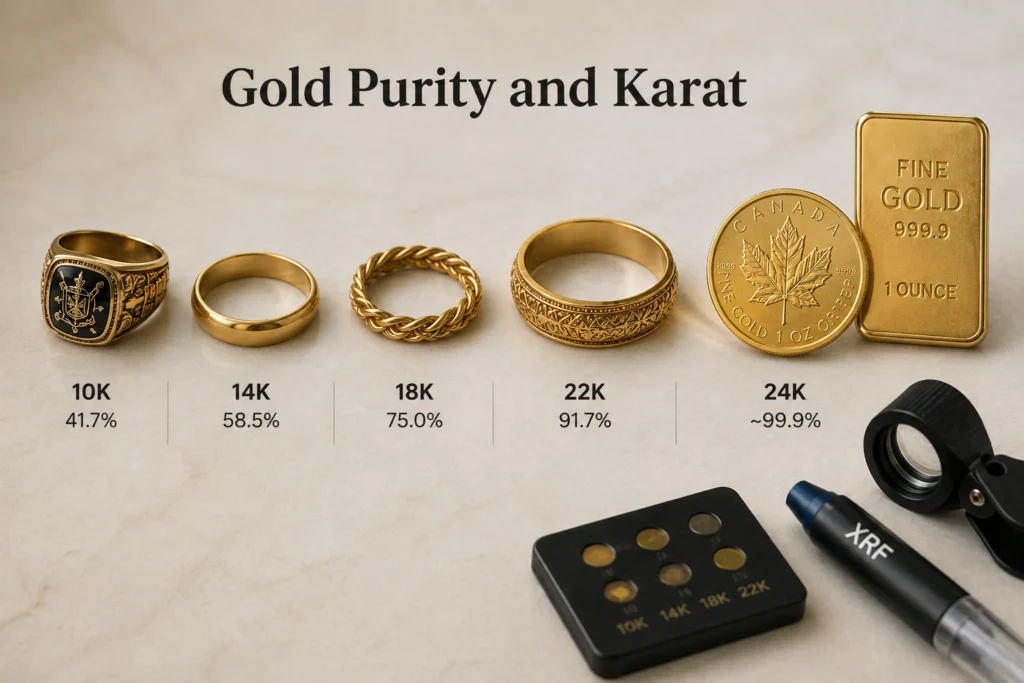
It is very important to know that gold jewellery is rarely 24k in real life. This is because pure gold is actually too soft to hold its shape in a ring or bracelet. That’s why it is alloyed with metals like silver or copper. Now this is where the karat stamp tells you roughly what fraction of the piece is actual gold.
| Common Mark | Approx. Gold Content | Writer Note |
| 10K | 41.7% | It is the most durable common alloy. It is often used in class rings and everyday-wear pieces because it resists scratching better than higher karats. However, it also carries the least gold value per gram. |
| 14K | 58.5% | Well, it’s the default choice for most Canadian and North American jewellery. After all, it is a practical middle ground between durability and gold content. |
| 18K | 75.0% | Common in finer or designer jewellery. It has a noticeably richer colour than 14K. But since it scratches more easily, the wear pattern is a useful clue when a stamp is worn away. |
| 22K | 91.7% | Frequently seen in South Asian and Middle Eastern jewellery traditions. It’s soft enough that stones are rarely set directly into it. |
| 24K | About 99.9% | Essentially pure gold. This is bullion territory (coins and bars). |
And in case you notice there’s no visible stamp, an expert will test it on the spot using acid testing or an XRF machine. Best would be consulting with an expert and avoiding someone lowballing you.
Weight, Live Gold Price and Buyer Deductions
Once gold’s purity is confirmed, the next step involves weighing the item. This is usually done with gemstones, and non-gold parts are not counted in the payable weight. Then the payable weight is multiplied by the current spot price. It would be best to use a gold price calculator to run the numbers yourself. It’s because gold price calculators use the live spot rate and give you a better idea of what your piece is worth before you get an offer.
Now it is also important to understand that what really separates a good offer from a bad one is the deduction the buyer takes off that raw melt value. Usually reputable dealers are very upfront about their margin because they have to cover refining costs. We recommend avoiding those who simply quote a low flat rate per gram and hope you don’t ask questions.
Best Places to Sell Gold in Canada
We have given several options as an answer to the question “what is the best place to sell gold Toronto or anywhere in Canada?”
Established Local Gold Buyers and Precious-Metal Dealers
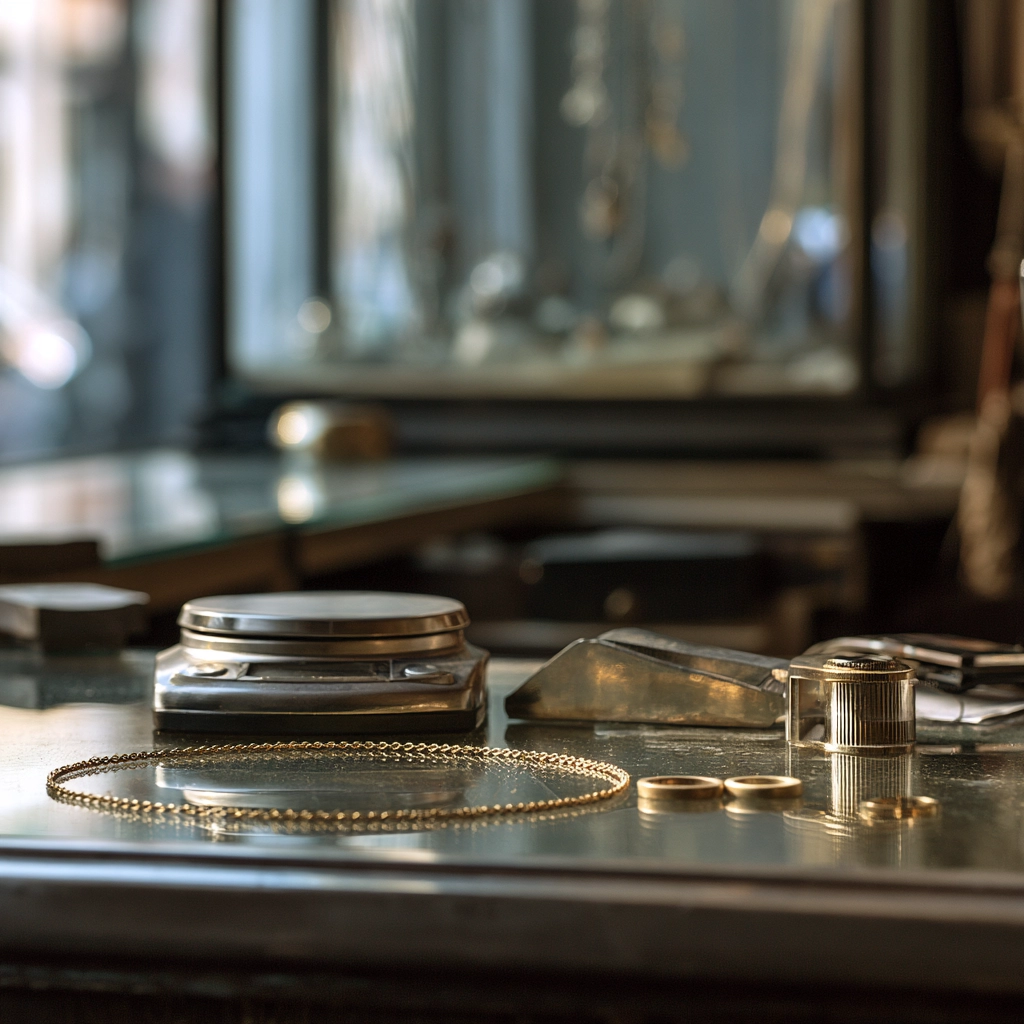
These are dedicated gold-buying storefronts. That’s why they are also considered the strongest all-round option. It’s because they handle gold daily and test purity accurately. They quote based on the live spot price and usually pay cash for gold or e-transfer the same day. Our recommendation would be to search for local gold buyers that have been operating in the area for years. Not the one that just opened in a strip mall last month.
Coin and Bullion Dealers
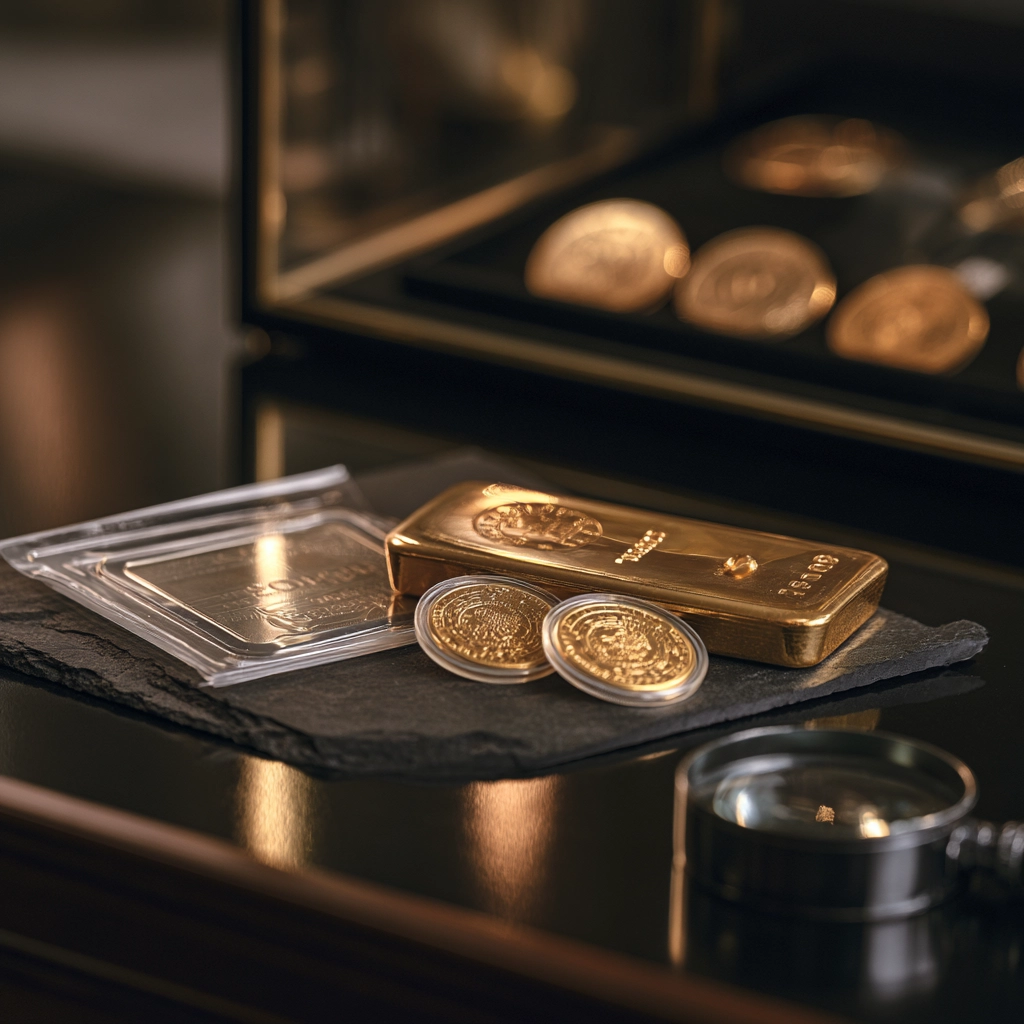
This is the recommended option for those who plan on selling recognised bullion like Royal Canadian Mint Maple Leaf coins, PAMP bars, or other investment-grade products. It’s because a bullion dealer typically pays closer to spot price than a general jewellery buyer. The Royal Canadian Mint’s own bullion pricing page is a useful reference point if you want to know the worth of coins before selling them.
Jewellery Stores and Estate Jewellery Buyers
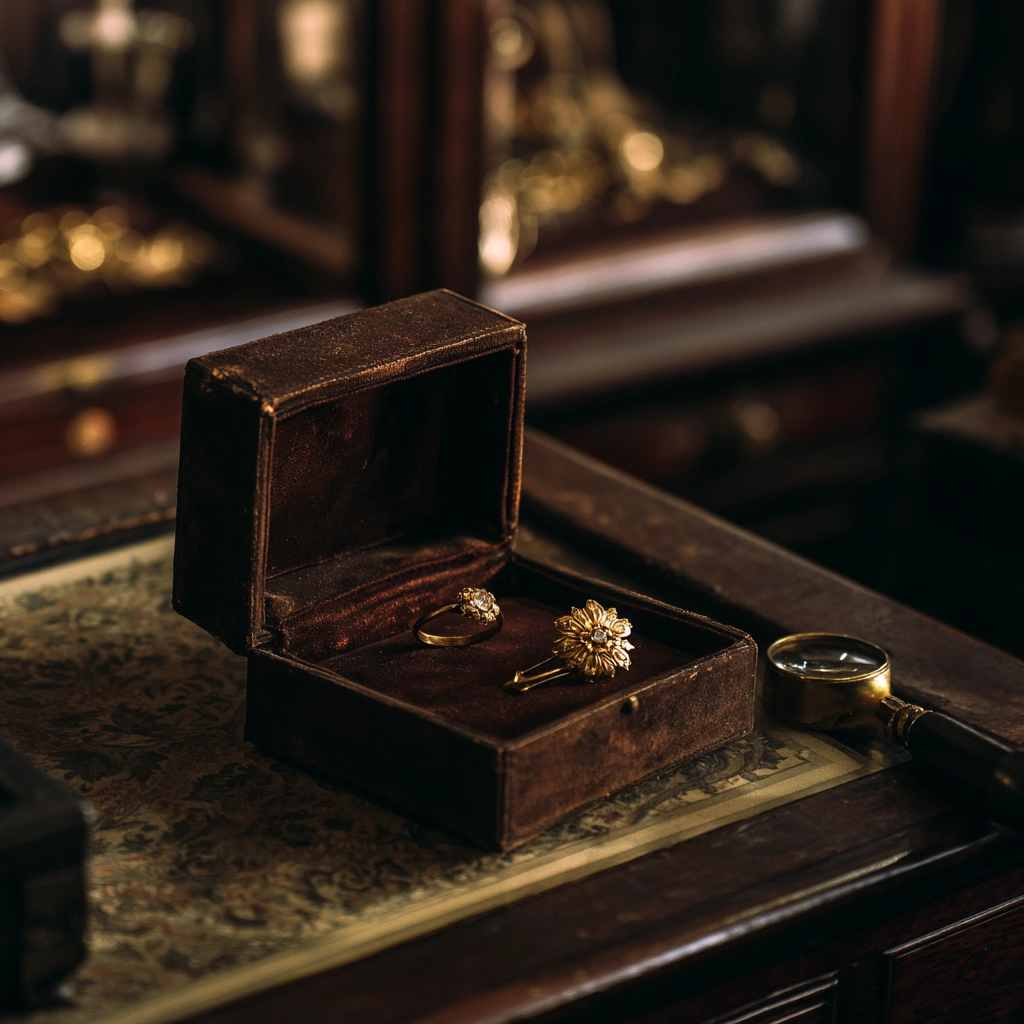
You can sell gold at jewellery stores, and then there are estate jewellery specialists that value a piece for its craftsmanship or vintage appeal rather than just its melt weight. This is a very important thing to consider when selling estate jewellery. It will help you get more than scrap value for a well-made or branded piece. However, we don’t recommend this option if your gold items are in the form of broken chains with no design value left.
Auction Houses and Consignment Specialists
This route is the best one if you plan to sell something genuinely rare or high-end. Something like designer jewellery, antique gold, or very unusual (historical) coins. An auction house or consignment specialist can sometimes fetch a price well above melt value by reaching collectors directly.
Online Gold Buyers
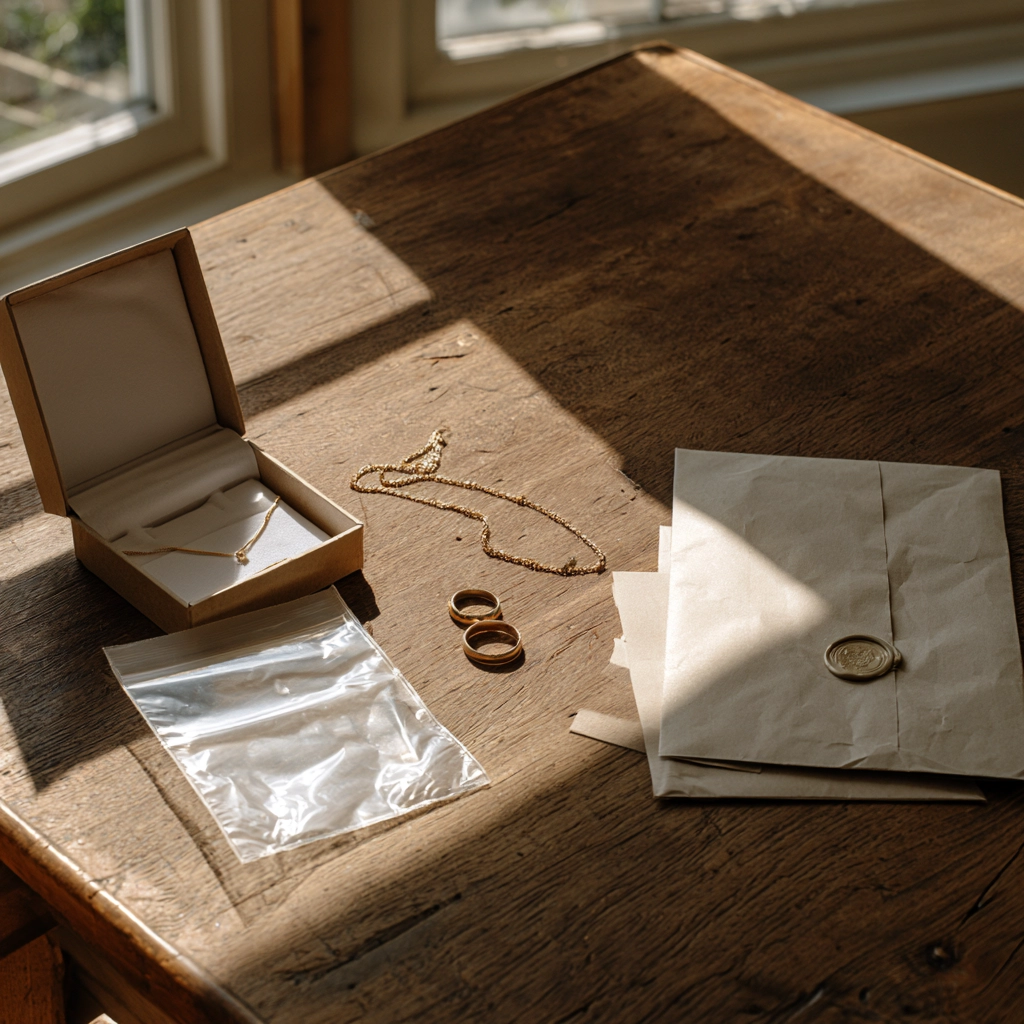
This option is only convenient if there’s no established cash for gold buyers near you. In this option, mail-in gold buyers pay after you send it to them in an insured package. It does mean parting with your gold before you’re paid. Therefore, opt for insured trackable shipping, and the online gold buyer’s track record must be checked (it matters more here than almost anywhere else).
Pawn Shops
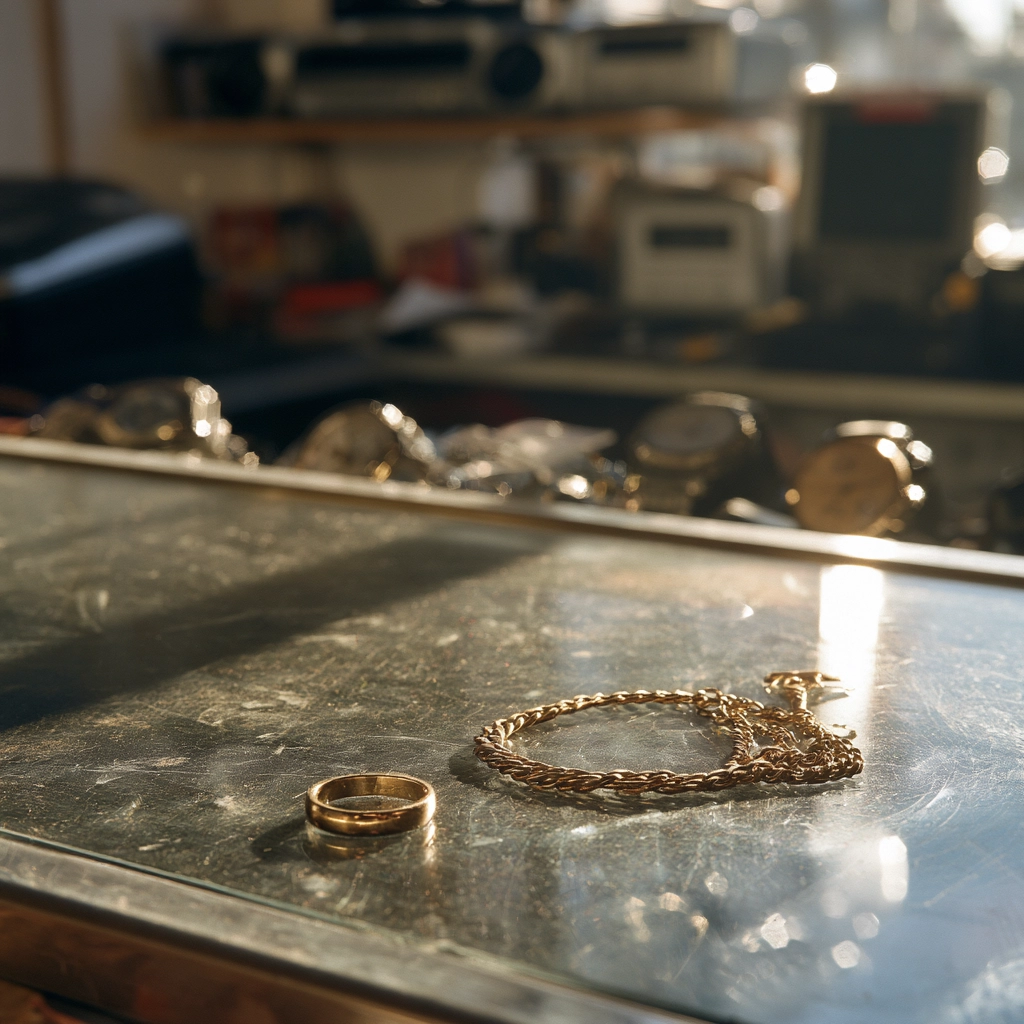
Well, this is an option to consider if you want the money fast. You walk in there with your gold and walk out with cash in minutes. However, the trade-off is that their offers are typically well below what a dedicated gold buyer would pay.
Banks and Major Financial Institutions
Here it is worth clearing up that mainstream Canadian banks generally don’t buy scrap or estate gold from the public. Institutions like the major chartered banks mostly sell gold bullion products (coins and bars) to investors, and some will buy back their own bullion. However, they are not the channel if you want to sell your grandma’s old ring.
| Selling Option | Often Best For | Main Advantage | What to Check |
| Local gold buyer | Scrap jewellery, broken chains | Fast, transparent, spot-based pricing | Licensing, reviews, years in business |
| Coin/bullion dealer | Maple Leafs, bars, certified coins | Pays closer to spot price | Buy-back policy, published pricing |
| Jewellery/estate buyer | Designer or vintage pieces | May pay above melt value | Appraiser credentials |
| Auction/consignment | Rare or collectible items | Potential for above-market price | Commission rate, timeline |
| Online buyer | No local buyer nearby | Convenience, no travel needed | Insured shipping, company reputation |
| Pawn shop | Small, urgent cash needs | Speed | Typically the lowest payout |
How to Choose a Reputable Gold Buyer?
The following checklist can be really helpful in separating a fair buyer from one hoping you don’t compare offers:
- The Better Business Bureau is very important. It shows ratings, accreditation status, and any past complaints.
- Ask how they price. A legitimate buyer will explain their formula (spot price, purity, weight, minus their margin) rather than just naming a flat number.
- Confirm they’re licensed to buy precious metals. Remember that requirements vary by province, and Canada’s Competition Bureau publishes guidance on spotting deceptive pricing and marketing tactics used by less scrupulous buyers.
- Get more than one quote. This is something that is always recommended if you want to get the best price.
- And watch for pressure tactics. A trustworthy buyer lets you think it over. One who pushes you to decide on the spot is a red flag.
How to Sell Gold Safely: Step by Step
- Sort and separate your items. Group scrap jewellery, bullion coins, and anything potentially collectible into separate piles. Doing so can be helpful as they may sell best through a different channel.
- Check the current spot price the morning you plan to sell.
- Get your items weighed and tested by at least two buyers before accepting an offer.
- Compare offers side by side, factoring in payout speed (cash same-day versus a mailed cheque) as well as the dollar amount.
- Read the fine print on any buy-back guarantee, minimum-quantity pricing tier, or “we’ll beat any quote” promise.
- Keep a record of the transaction, including an itemized receipt showing weight, purity, and price paid per gram.
- Report anything that feels off. If a buyer misrepresents an offer or refuses to provide a receipt, the Canadian Anti-Fraud Centre accepts reports from consumers, whether or not money has already changed hands.
Where to Sell Gold in Major Canadian Cities
Selling gold locally requires knowledge and the ability to go from one place to another on the same day. This is the fastest way to compare real offers rather than advertised rates.
Where to Sell Gold in Toronto?
Did you know that Toronto has one of the country’s largest concentrations of gold buyers? It has everything from dedicated cash-for-gold storefronts along major shopping strips to jewellery districts with dozens of estate buyers within a few blocks of each other. This abundance can work in your favor. You can get three or four in-person quotes in a single afternoon before deciding where to sell gold in Toronto. Best would be looking for BBB-listed dealers in established retail areas. And remember that it is best to walk out if the quote feels low than regret later.
Where to Sell Gold in Vancouver?
Well, Vancouver’s gold-buying scene is actually spread across a mix of downtown jewellery stores and dedicated precious-metal dealers. You’ll find noticeable concentration around the city’s established shopping districts. Best would be prioritizing dealers who advertise same-day spot-price payouts over generic “we buy gold” signage.
Where to Sell Gold in Montreal?
Montreal is a great place to sell gold as well. It offers a solid spread of options like old-city jewellery quarters as well as newer bullion and coin specialists. Since much of the city’s gold trade occurs in French-speaking establishments, it would be better to confirm that pricing documentation and receipts are clearly provided. Also, coin collectors in particular will find a handful of long-established bullion dealers here that are worth checking against Royal Canadian Mint pricing before accepting an offer.
Where to Sell Gold in Calgary?
Calgary is a bit different. Here, gold buyers tend to be more spread out across the city rather than clustered in one district. Therefore, it’s worth calling ahead to confirm hours and whether same-day testing is available. The city has a steady presence of coin and bullion dealers, given Alberta’s broader investment community, making it a reasonable spot for anyone offloading Maple Leafs or bars rather than just scrap jewellery.
Where to Sell Gold in Ottawa?
As the capital, Ottawa has a smaller but super reliable network of established gold buyers. However, most of them are concentrated around the downtown core and ByWard Market area. And since the city is smaller than Toronto or Vancouver, it’s worth getting quotes from a slightly wider radius, including nearby Gatineau. This will help make sure you’re comparing enough offers before settling on one.
Is Now a Good Time to Sell Gold?
Well, the answer is never really a straightforward one. The “Now” part is relative to whatever the spot price happens to be doing that week. It would be best to check where the current price sits against its recent range. This is where financial sites and the Bank of Canada’s exchange rate data can be super helpful in contextualizing the CAD conversion.
And if there is no rush to sell gold, you can always wait to check prices over a week or two before committing.
Mistakes to Avoid When Selling Gold
- Accepting the first offer without comparing at least one or two others. This is a major NO-NO!
- Selling to an unlicensed door-to-door or pop-up buyer with no fixed address.
- Not confirming the karat purity yourself before hearing the buyer’s number.
- Forgetting that gemstones, clasps, and non-gold findings shouldn’t be priced as gold.
- Ignoring vintage, designer, or collectible value and selling a special piece for scrap.
- Failing to ask for an itemized receipt showing weight, purity, and price per gram.
- Assuming a bank branch buys gold. Most don’t.
Final Thoughts
And there you have it. There’s no single winner when it comes to the best place to sell gold in Canada. And if you ask us, the right buyer depends entirely on what’s in your hand. But remember that whichever route you choose, a little groundwork (checking purity, getting more than one quote, and confirming the buyer is legitimate) is really important. It is what actually determines whether you walk away with a fair price or leave money on the table.
FAQs
Do I Need Identification to Sell Gold in Canada?
Yes. It is required in most provinces. Precious-metal dealers are required by the government to record a valid government-issued ID for each transaction.
Can I Sell Gold Jewellery That Is Broken or Missing Stones?
Absolutely. Broken clasps, single earrings, and pieces missing stones are usually sold as scrap and priced on their gold content alone, so damage doesn’t disqualify an item.
Should I Remove Gemstones Before Selling Gold Jewellery?
Not necessarily. The thing is that most buyers will remove and weigh stones separately as part of the appraisal, so there’s no need to pry them out yourself unless you specifically want to keep them.
How Quickly Do Gold Buyers Pay After a Sale?
Well, it depends on the channel. Local buyers, pawn shops, and coin dealers typically pay cash or e-transfer the same day (on the spot). Online mail-in buyers usually pay by cheque or direct deposit within a few business days of receiving and verifying your shipment. Auction houses and consignment sales are usually the slowest. They often take weeks to months since payment depends on the item actually selling.